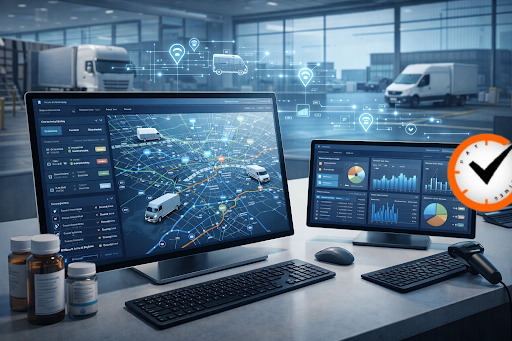
The transportation and logistics industry is under constant pressure to deliver faster, smarter, and more efficiently. Customers now expect real-time tracking, accurate delivery timelines, and seamless communication, while logistics providers must manage rising fuel costs, route complexity, and operational risks.
Manual planning, disconnected systems, and outdated tracking tools are no longer sufficient. To stay competitive, logistics companies are investing in custom-built transportation and logistics software that offers real-time control, visibility, and scalability across the entire supply chain.
Why Real-Time Control Matters in Logistics Operations?
Modern logistics operations involve multiple moving parts: vehicles, drivers, warehouses, routes, and delivery schedules. Without real-time data, even small disruptions can lead to delays, higher costs, and customer dissatisfaction.
Custom logistics software provides:
- Live vehicle and shipment tracking
- Dynamic route optimization
- Automated dispatch and scheduling
- Instant alerts for delays or disruptions
- Centralized dashboards for decision-making
This is why transportation and logistics software development has become a strategic priority rather than a technical upgrade.
What Is Transportation & Logistics Software?
Transportation and logistics software is a digital system designed to manage, monitor, and optimize logistics operations from end to end. When built as a custom solution, it adapts to your business model instead of forcing your team to adjust to rigid workflows.
Core modules typically include:
- Fleet management and GPS tracking
- Route planning and optimization
- Order and delivery management
- Warehouse and inventory integration
- Driver management and performance tracking
- Analytics and reporting dashboards
Through transportation and logistics software development, businesses gain operational clarity, faster response times, and better cost control.
Challenges Faced by Logistics Businesses Today
Many logistics companies still rely on spreadsheets or generic platforms that fail to scale with growth. Common challenges include:
- Limited real-time visibility
- Inefficient route planning
- Poor coordination between teams
- Inaccurate delivery ETAs
- High operational costs
Custom-built logistics platforms solve these issues by aligning software capabilities with real operational needs, especially when developed by teams specializing in custom software development London.
Benefits of Custom Logistics Software Solutions
1. Real-Time Visibility
Track vehicles, drivers, and shipments live, enabling faster decisions and proactive issue resolution.
2. Improved Delivery Accuracy
Automated route optimization reduces delays and improves on-time delivery rates.
3. Cost Optimization
Better route planning and fuel usage tracking significantly reduce operational expenses.
4. Scalability for Growth
Custom platforms scale easily as fleets, routes, and delivery volumes increase.
These benefits explain the growing demand for transportation and logistics software development across industries such as e-Commerce, retail, manufacturing, and third-party logistics.
Why Businesses Choose Custom Software Development London?
London is a global hub for logistics, trade, and technology innovation. Companies working with teams offering custom software development London benefit from deep industry insight, strong engineering standards, and experience handling complex operational systems.
When businesses invest in custom software development London, they gain:
- Software tailored to real logistics workflows
- Seamless integration with existing systems
- Compliance with regional and global standards
- High-performance, scalable architecture
Many logistics companies prefer custom software development London partners for their ability to balance technical excellence with real-world operational understanding.
Key Features of Transportation & Logistics Software
Fleet & Vehicle Tracking
Live GPS tracking enables real-time monitoring of vehicle location, speed, and route adherence.
Route Optimization
AI-powered route planning reduces delivery time, fuel consumption, and operational costs.
Order & Dispatch Management
Automated dispatching ensures the right vehicle and driver are assigned efficiently.
Driver Management
Track driver availability, performance, and compliance with safety regulations.
Analytics & Reporting
Data-driven insights help identify inefficiencies, predict demand, and optimize operations.
With strong transportation and logistics software development, these features can be customized for last-mile delivery, long-haul transport, or multi-warehouse operations.
The Role of Frontend Experience in Logistics Platforms
Logistics teams rely heavily on dashboards and mobile interfaces for daily operations. A slow or cluttered interface can lead to errors, delays, and poor adoption.
This is where working with the best ReactJS developers becomes valuable. ReactJS enables fast, responsive, and user-friendly interfaces that update in real time.
Benefits include:
- Interactive dashboards for dispatchers
- Real-time updates for tracking screens
- Smooth mobile and tablet experiences
- Reduced system lag during peak operations
By involving the best ReactJS developers, logistics software becomes intuitive and efficient for both office teams and field staff.
Security & Reliability in Logistics Software
Logistics systems handle sensitive data such as shipment details, customer information, and operational analytics. Custom platforms allow businesses to implement:
- Role-based access control
- Secure API integrations
- Data encryption
- System monitoring and alerts
Companies that invest in custom software development London often prioritize security and reliability from the architecture stage, ensuring stable operations even at scale.
Custom vs Off-the-Shelf Logistics Software
| Feature | Off-the-Shelf Software | Custom Logistics Software |
| Flexibility | Limited | Fully customizable |
| Scalability | Restricted | Highly scalable |
| Integrations | Predefined | Tailored to systems |
| User Experience | Generic | Role-based & intuitive |
| Long-Term Value | Subscription-based | Strategic investment |
For businesses focused on efficiency and growth, custom transportation and logistics software development clearly offers greater long-term value.
Long-Term Support & Continuous Optimization
Logistics operations evolve constantly due to market demand, fuel costs, regulations, and customer expectations. Software must evolve with them.
Working with experienced partners in custom software development London ensures:
- Ongoing feature enhancements
- Performance optimization
- Scalability upgrades
- Continuous technical support
Some development teams, such as IIH Global, have experience delivering custom software across logistics and supply-chain-driven industries. Their approach highlights the importance of aligning technology with operational realities without unnecessary complexity.
Choosing the Right Development Partner
When selecting a development partner for logistics software, consider:
- Proven experience in transportation and logistics software development
- Strong frontend expertise with modern frameworks
- Scalable backend architecture
- Clear communication and agile delivery
- Post-launch support and optimization
Choosing the right partner ensures the software delivers measurable operational impact.
Conclusion
Optimizing deliveries today requires more than vehicles and drivers; it requires real-time data, intelligent systems, and seamless coordination. Custom transportation and logistics software empowers businesses to gain full operational control, improve delivery accuracy, and scale efficiently.
By investing in custom software development London, collaborating with the best ReactJS developers, and prioritizing robust transportation and logistics software development, logistics businesses can future-proof their operations and stay competitive in a fast-moving digital landscape.